
MVP, prototype or V1: What’s the difference?
1 juillet 2026


When an organization wants to develop an application, a platform, or software, the terms “prototype,” “MVP,” and “V1” often come up in discussions. However, these concepts do not mean the same thing.
Understanding the difference allows you to plan a project more effectively, avoid unnecessary expenses, and choose the right approach at the right time.
1. Why is this distinction important?
One of the common risks in digital projects is investing in the development of a complete solution before validating certain key assumptions. For example:
- Do users really need this feature?
- Is the problem to be solved clearly understood?
- Is the business model viable?
- Do the proposed processes align with real-world conditions?
Depending on the stage of your project, a prototype, an MVP, or a first full version will not all pursue the same objectives.
2. The prototype: testing an idea quickly
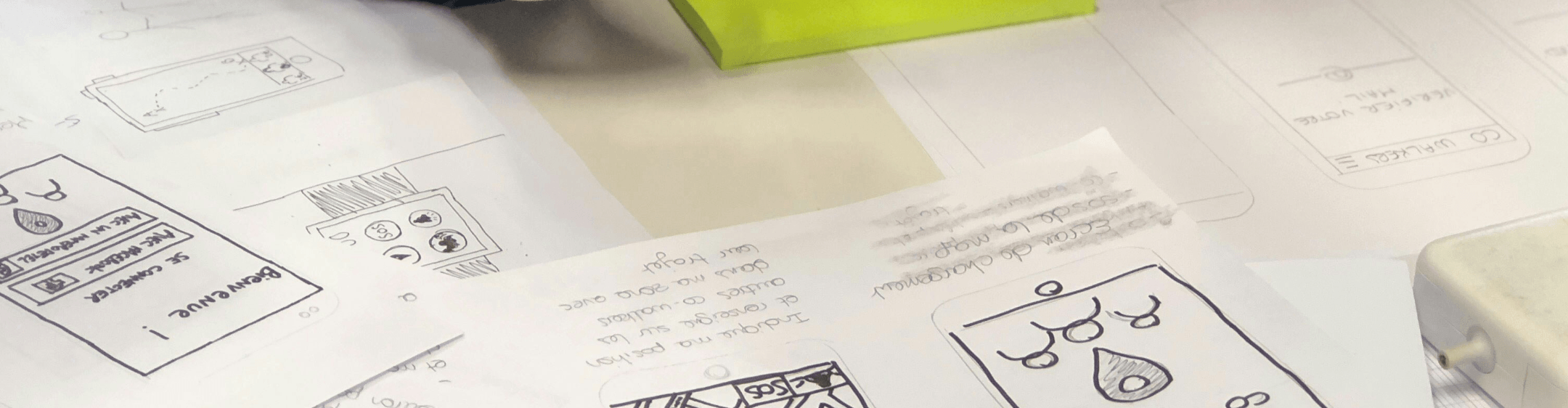
A prototype is primarily used to visualize a concept. Its purpose is not to be fully functional, but rather to help stakeholders understand what is being proposed.
A prototype can take several forms:
- visual mockups;
- user flows;
- interactive screens;
- simulated demonstrations;
- technical proof of concept.
At this stage, some features may be missing or simulated.
When should you use a prototype?
A prototype is particularly useful when:
- the idea is still being developed;
- several approaches are possible;
- the requirements are not yet fully defined;
- it is necessary to gain the support of partners or investors;
- it is necessary to gather feedback from potential users.
What the prototype helps validate
- Understanding the problem.
- The user experience.
- The relevance of the proposed features.
- The overall vision for the project.
What the prototype does not allow to validate
- Actual performance.
- Technical robustness.
- Operational processes.
- Large-scale deployment.
The prototype essentially answers the question: “Does this idea seem viable?”
3. The MVP: Testing the Project’s True Value
MVP stands for Minimum Viable Product. It is the smallest functional version of a product that allows you to validate key assumptions with real users. Unlike a prototype, an MVP actually works.
The goal is not to offer all the features that have been conceived, but only those that address the primary need.
When should you use an MVP?
An MVP is often used when you want to:
- test a market;
- validate a business model;
- attract early adopters;
- collect real-world data;
- reduce financial risks.
What the MVP helps validate
- User interests.
- Actual behaviors.
- Features that are actually used.
- The value of the product.
- Business assumptions.
Example
Let’s imagine a booking platform. The full vision includes:
- online booking;
- integrated payment;
- user management;
- advanced analytics;
- accounting automation;
- mobile app.
The MVP might only include:
- account creation;
- booking;
- confirmation.
The rest can be added later if the need is confirmed.
The MVP primarily answers the question: “Do users actually want this solution?”
4. V1: the first complete product
V1 generally refers to the first official version of a product that is ready for long-term use. At this stage, several assumptions have already been validated.
The goal is no longer simply to test an idea, but to provide a solution that is comprehensive enough to support operations.
A V1 often includes:
- more features;
- enhanced security;
- administrative processes;
- support;
- documentation;
a more robust infrastructure.
Th V1 often marks the start of the product’s larger-scale deployment.
What V1 Enables
- Support day-to-day operations.
- Facilitate greater growth.
- Provide a more comprehensive experience
- Reduce reliance on temporary solutions.
V1 primarily answers the question: “Are we ready to use this solution in the long term?”
5. Prototype, MVP or V1: which one should you choose?
| Step | Main objective |
|---|---|
| Prototype | Test an idea |
| MVP | Test the product’s value |
| V1 | Leverage a comprehensive solution |
In practice, not all projects need to go through each of these steps. Some organizations have already validated their need and can move directly to an MVP or V1. Others will save time and money by starting with a prototype.
The important thing is to choose the approach that minimizes risk while meeting the project’s objectives.
6. How can you avoid investing too early?
One of the most common mistakes is trying to develop a complete V1 right from the start. This approach generally increases:
- costs;
- timelines;
- risks;
- project complexity.
A phased approach often makes it possible to:
- get feedback more quickly;
- better understand actual needs;
- adjust priorities;
reduce unnecessary investments.
This article was written in collaboration with the FJNR team and edited by Noël Rignon.


